
Somatic Meditation: A Self Start Guide
If you’ve ever felt like your mind was calm but your body was still bracing for impact, you already understand why somatic meditation exists. Traditional meditation asks you to quiet your thoughts. Somatic meditation asks you to listen to your body — and that’s a different, deeper kind of stillness.
So, what is somatic meditation? It’s a practice that uses body-based awareness — sensation, breath, posture, micro-movements — to help the nervous system process and release stored stress and trauma, rather than relying on thought alone. Where conventional meditation often lives in the mind, somatic meditation lives in the tissue, the breath, the gut, the shoulders you didn’t realize were clenched. If you want to understand the broader framework this comes from, my post on What Is Embodiment Therapy is a great place to start.
Why the Body Needs Its Own Practice
The body keeps score long after the mind has moved on. A stressful conversation from years ago can still live in your jaw, your chest, your low back. This is why somatic meditation for trauma has become such an important tool in healing work — it doesn’t ask you to relive the story, it asks you to feel what’s still here, in present time, and let it move through. I go deeper into this in How Is Trauma Stored in the Body, if you’d like to understand the science behind why this works.
Many people come to this work after asking themselves what is somatic meditation capable of healing that talk therapy alone hasn’t reached. The honest answer is: the parts of you that live below language — the held breath, the clenched jaw, the body that still flinches at certain tones of voice.
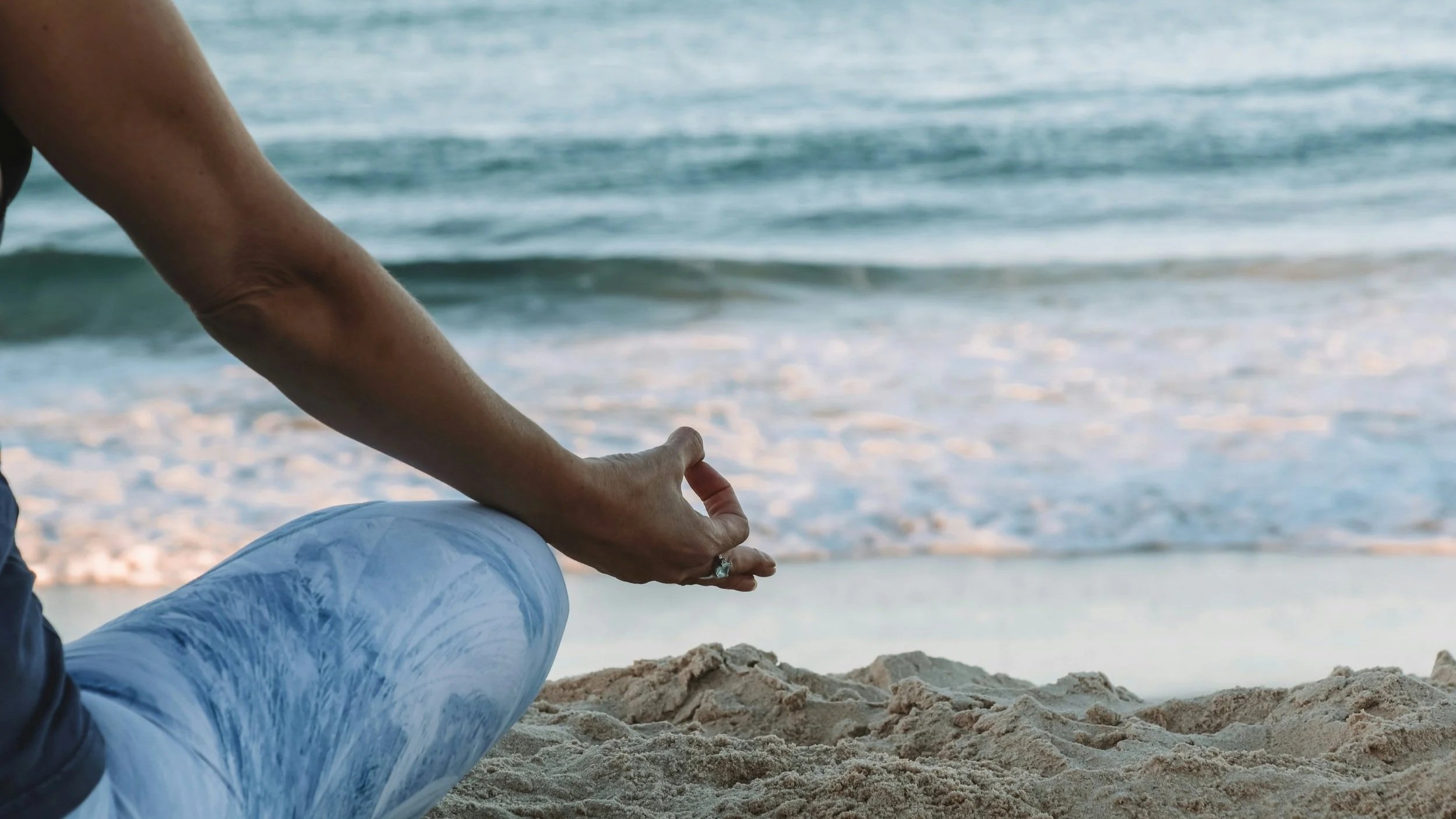
How to Do Somatic Meditation: A Self-Start Practice
You don’t need a special room or an hour of free time to begin. Here’s a simple starting point for how to do somatic meditation on your own:
1. Sit or lie down somewhere you won’t be interrupted.
2. Close your eyes and take three slow breaths, letting the exhale be longer than the inhale.
3. Scan your body from feet to head — not to fix anything, just to notice.
4. Pause anywhere you feel tightness, heat, heaviness, or tingling.
5. Stay there. Breathe into it. Let it be exactly as intense as it is, without rushing it to change.
6. When something shifts — a sigh, a shiver, a release — let your body finish that movement.
This is the foundation. Breath is doing a lot of the work in this practice, so if you want to understand it more fully, check out Somatic Breathwork: The Basic Introduction. Once you’re comfortable with self-guided practice, many people find it helpful to deepen their work with a guided somatic meditation, where a practitioner’s voice and pacing can help you go further than you might on your own — especially in the beginning, when self-trust with the body is still being rebuilt.
If self-practice feels like a lot to hold alone, that’s exactly what a guided somatic meditation is for — having someone else hold the pacing and safety of the session so your nervous system can fully let go into the process instead of managing it.
Somatic Meditation for Anxiety
Anxiety often shows up as a body that’s stuck in “on,” even when there’s nothing to run from. Practicing somatic meditation for anxiety means working directly with that activation — the racing heart, the shallow breath, the restless legs — instead of only trying to talk yourself out of it. By meeting the sensation with curiosity instead of resistance, the nervous system slowly learns it’s allowed to come back down. For more tools to support this, my post on How to Regulate Your Nervous System pairs well with this practice.
This is also where somatic meditation for trauma and anxiety work overlap most clearly — anxiety is often just trauma’s alarm system, still sounding long after the danger has passed. Practicing somatic meditation for anxiety consistently is one of the gentlest ways I’ve seen that alarm system learn to stand down.

Is trauma Holding you back?
Perhaps you experienced a specific event that left you feeling different, disconnected, or stuck. Or maybe you carry a sense of unease in your body, struggling with anxiety or a feeling that something isn’t quite right.
As a somatic experiencing practitioner I specialize in helping people process and release stored trauma through gentle yet effective methods.
Download my FREE guide “Get Unstuck! The Truth About Body Trauma and How to Break Free’ and learn how to create the future you deserve.
Can Somatic Meditation help with Autoimmune Disorders?
This is a question I hear often, and it deserves an honest answer: somatic meditation is not a treatment for autoimmune disease, and it won’t replace medical care. What it can do is support the nervous system that’s underneath everything else — helping regulate the chronic stress response that’s known to influence inflammation and flares. For many people living with autoimmune conditions, somatic practice becomes one piece of a larger care picture, supporting the body’s baseline sense of safety alongside medical treatment.
Bringing It Into Your Life
Somatic meditation isn’t about achieving stillness — it’s about building a relationship with your body where sensation isn’t something to escape. Start small. A few minutes a day, consistently, will do more than one long session every few weeks. Over time, you’ll likely notice you catch tension earlier, breathe deeper without trying, and feel more at home in your own skin.
If you’re craving connection alongside this work, you’re warmly invited to join The Gathering, my monthly women’s somatic embodiment circle in Orange County. It’s an intimate space — no more than ten women — where we move through this kind of body-based healing together. Learn more and reserve your spot here.
And if you’d like more individualized support, I offer one-on-one somatic breathwork and somatic experiencing sessions, available both online and in person. Whether you’re just beginning or deep in your healing journey, we can build a practice that meets your body exactly where it is. Reach out here to explore working together.

Brianna Anderson, SEP
If you’re ready to begin your healing journey I’m here to help so you can begin to live the life of your dreams
My private practice specializes in helping people who have endured trauma, resolve the symptoms out of their body, mind & spirit so they can feel comfortable in their skin, find inner peace and live the desires of their heart.
I am based out of South Orange County, Ca and offer online therapy sessions. Whether you are just starting your healing journey or ready to try something new, I am here to help.